.png)
Low Energy, Cravings And Weight Gain: 10 Signs Of Cortisol Imbalance and Why You Should Have It Tested
Feeling tired, wired, and craving sugar? Learn ten signs of cortisol imbalance and why comprehensive hormone testing can gently guide you back to balance.

Written and medically reviewed by Dr. Courtney Ranieri, ND, a licensed naturopathic doctor registered with the College of Naturopaths of Ontario (Reg. #3726). Last reviewed July 2026.
Cortisol is the body's key stress hormone.
You know stress isn't great for your health, but you may not know we have the hormone cortisol to thank for that. Cortisol plays a role in many body functions and needs to be in balance to keep our metabolism up, energy high, appetite, blood pressure and blood sugar controlled, and sleep refreshing.
10 signs of cortisol imbalance
- You're tired in the morning (but maybe get a burst of energy in the evening)
- You're not sleeping well
- You notice weight gain in your midsection
- You crave sugar, salty foods or carbs
- You notice memory or concentration problems (brain fog)
- You get sick often
- You find it hard to build muscle or recover after a workout
- You feel stressed, fatigued or irritable
- You experience anxiety or low mood
- You're not cycling regularly or are struggling with fertility
Why cortisol matters
Cortisol is released from our adrenal glands in response to stressors. At the right times, it's very beneficial, getting the body into fight-or-flight mode to increase energy and alertness while temporarily shutting down digestion and immune function. The problem is that nowadays most of our stressors aren't actual threats to our life, so we end up in fight-or-flight far more often than we need to, which throws off our natural cortisol rhythm.
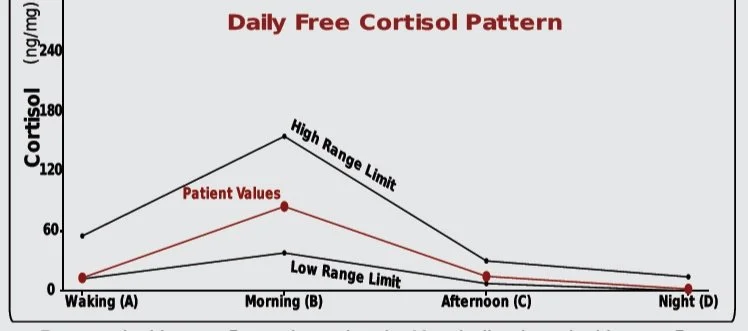
Cortisol should be higher in the morning, to give you energy, and lower in the evening and overnight, to stimulate melatonin so you can sleep. That's why if you've had cortisol tested via a single blood draw and it came back 'normal', you're not getting the full picture.
Comprehensive hormone testing helps uncover the root cause
DUTCH testing, the Dried Urine Test for Comprehensive Hormones, is a simple dried urine test that gathers extensive information on hormones and how they're metabolized, including estrogen and its metabolites, androgens, progesterone, melatonin, and the daily pattern of free cortisol including the Cortisol Awakening Response.
The good news: it is possible to rebalance your cortisol
Understanding where your cortisol is imbalanced, using proper testing and a comprehensive plan, is key. Some common tips: focus on a healthy lifestyle (daily stress reduction like meditation, deep breathing and acupuncture; refreshing sleep; and exercise); optimize nutrition (protein and healthy fats to steady blood sugar, timing carbs and reducing sugar, and cutting back on coffee); use supportive supplements like adaptogens (rhodiola, holy basil, ashwagandha), melatonin, L-theanine and magnesium; and test your hormones. Comprehensive hormone testing is available from Dr. Courtney.
Always check in with your Naturopathic Doctor or other health care provider before starting any treatments or making changes to your healthcare plan.
Ready to optimize your hormones? Book now.
About the author
Dr. Courtney Ranieri, ND is a board-licensed naturopathic doctor and the founder of Somewhere Health. She earned her Doctor of Naturopathic Medicine at the Canadian College of Naturopathic Medicine in Toronto and holds an Honours Bachelor of Science from the University of Western Ontario. Her clinical focus spans hormonal health, fertility, digestion, and women's health, with advanced training in pelvic floor therapy and integrative fertility care.